Red Eye Treatment: What Should You Do When Antibiotic Eye Drops Don’t Help?
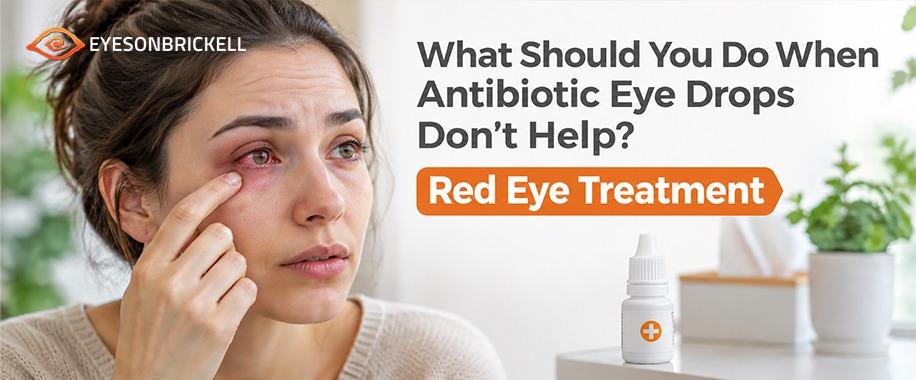
Why are your eyes still red after using antibiotic eye drops? One possible reason is that bacteria are not causing the problem. Allergies, dry eye, eyelid inflammation, and other conditions can produce similar symptoms but need different treatments. Identifying the underlying cause is essential because the right red eye treatment depends on what is triggering the redness.
Why Aren’t Antibiotic Eye Drops Improving Your Red Eyes?
Antibiotic eye drops treat bacterial infections, but they cannot relieve every condition that causes redness. If your symptoms continue, your eye doctor may need to review the original diagnosis and treatment plan. Here are some possible reasons the drops are not helping.
1. Your Red Eye May Be Caused by a Virus
Viral conjunctivitis, commonly known as viral pink eye, may develop alongside a cold or after contact with someone who has an eye infection.
Common symptoms include watery discharge, burning, gritty sensations, and redness that may spread from one eye to the other.
Antibiotic drops do not kill viruses. Most cases improve with time, although supportive care may help relieve discomfort. An eye doctor can assess your symptoms and recommend suitable care.
2. You May Have Allergic Conjunctivitis
Exposure to pollen, mold, dust, and other airborne allergens can trigger allergic conjunctivitis. This immune response may cause:
- Intense itching in one or both eyes.
- Watery discharge.
- Puffy or swollen eyelids.
- Redness that returns after allergen exposure.
Antibiotics do not treat allergic reactions. Identifying the trigger and using appropriate allergy treatments can help manage symptoms.
3. Dry Eye Disease May Be Causing Persistent Redness
Red eyes can also result from an unstable tear film. When your eyes do not produce enough tears or the tears evaporate too quickly, the surface can become irritated.
You may experience burning, a gritty feeling, fluctuating vision, and recurring redness. Long hours on digital screens, air conditioning, and contact lens wear can make these symptoms worse.
Antibiotic drops will not correct an underlying tear-film problem. Your eye doctor may recommend lubricating drops or other dry eye treatments after examining your eyes.
4. Blepharitis May Be Behind Your Red Eyes
Blepharitis is inflammation along the edges of the eyelids. It can affect the oil glands near the eyelashes and cause:
- Red or swollen eyelid edges.
- Crust around the eyelashes.
- Burning or itching.
- A gritty sensation.
Because blepharitis affects the eyelids, antibiotic eye drops alone may not address the underlying problem. Your treatment plan may also include specific eyelid care.
5. Your Contact Lenses May Be Irritating Your Cornea
Wearing contact lenses for too long or cleaning them incorrectly can irritate the cornea and increase infection risk.
Corneal irritation or infection may cause redness, pain, watering, and light sensitivity. These symptoms may require prompt red eye treatment, particularly if you also experience blurred vision.
Remove your lenses and arrange an eye examination. Resume wearing them only when your eye doctor confirms it is safe.
6. You May Be Experiencing a Reaction to the Eye Drops
Certain ingredients or preservatives in eye drops can cause sensitivity in some people. If you notice increased burning, itching, swelling, or redness after applying the drops, contact your prescribing doctor.
Do not stop or change prescribed medication without medical advice, or use leftover or steroid-containing drops unless prescribed for your current condition.
7. The Bacterial Infection May Not Be Responding to Treatment
Sometimes, a bacterial infection does not improve with the initial medication. The diagnosis may need reviewing, or the bacteria may not respond to the prescribed antibiotic.
Your eye doctor may re-examine your eyes or recommend further testing before changing the medication. The right red eye treatment depends on identifying why the infection is not improving.
8. A More Serious Eye Condition May Be Causing the Redness
Not every red eye is conjunctivitis. Conditions such as keratitis, uveitis, and acute angle-closure glaucoma can also cause redness.
Watch for severe pain, blurred vision, or light sensitivity. Acute angle-closure glaucoma may also cause headaches, nausea, and vomiting. These symptoms require urgent medical assessment rather than repeated use of antibiotic drops.
What Should You Do If Antibiotic Eye Drops Are Not Working?
If your eyes remain red despite treatment, avoid trying different medications without guidance. Follow these steps while arranging a follow-up examination:
- Contact Your Prescribing Eye Doctor: Explain how long you have used the drops and whether your symptoms have changed.
- Follow Medication Instructions: Do not increase the dose, stop treatment early, or switch medications without medical advice.
- Pause Contact Lens Use: Avoid wearing lenses while your eye is red or irritated. Ask your doctor when it is safe to start again.
- Avoid Rubbing Your Eyes: Wash your hands regularly and use separate towels to reduce the spread of infection.
- Do Not Reuse Old Prescriptions: Medication prescribed for a previous infection may not be suitable for your current symptoms.
- Arrange a Follow-Up Examination: If redness persists or worsens, a professional assessment can help identify the cause.
Some bacterial eye infections begin improving within a few days, but the expected response varies by infection and medication. Follow the timeline provided by your doctor. If there is no improvement within that period, contact the prescribing practice rather than waiting indefinitely.
When Does a Red Eye Need Immediate Medical Attention?
Some symptoms should not wait for a routine appointment. Seek urgent medical attention if you experience:
- Sudden loss or significant reduction in vision.
- Moderate or severe eye pain.
- Strong sensitivity to light.
- A painful red eye while wearing contact lenses.
- Suspected eye injury or chemical exposure.
- Redness accompanied by a severe headache, blurred vision, nausea, or vomiting.
Prompt assessment is important because some causes of redness can damage the cornea or affect vision if treatment is delayed.
How Does an Eye Doctor Determine the Right Red Eye Treatment?
When redness does not improve, an eye doctor needs to identify its cause before recommending further medication. A professional examination may involve:
- Reviewing Your Symptoms: Your doctor may ask when the redness started, which drops you have used, and whether you experience pain, itching, or discharge.
- Checking Your Vision: Visual acuity testing helps identify changes that may accompany an eye condition.
- Examining the Eye Surface: A slit-lamp examination allows the doctor to assess the cornea, conjunctiva, and eyelids.
- Checking for Corneal Damage: Fluorescein staining can help reveal scratches, abrasions, or other surface problems.
Treatment depends on the diagnosis and may involve medication, lubricating drops, allergy management, or other care. This examination helps ensure that red eye treatment addresses the underlying condition rather than simply reducing visible redness.
Where Can You Get Professional Red Eye Treatment in Miami?
Persistent redness deserves attention, especially when it continues despite medication. An eye care provider can examine the eye surface, assess possible infections, and identify other conditions contributing to the symptoms.
If you are looking for red eye treatment in Brickell, Eyes on Brickell provides eye care services in Miami. The practice can evaluate ongoing eye concerns and recommend next steps based on your symptoms and examination.
For professional red eyes treatment in Miami, visit Eyes on Brickell at 2885 SW 3rd Ave, Suite 100, Miami, FL 33129, to schedule an eye examination.
FAQs
1. How long should antibiotic eye drops take to improve a bacterial eye infection?
Some bacterial eye infections begin improving within a few days. However, recovery depends on the infection and prescribed medication. If symptoms do not improve within the timeframe provided by your doctor or become worse, contact your eye doctor.
2. Can antibiotic eye drops make red eyes worse?
Some people may experience irritation or sensitivity to ingredients in eye drops. Increased redness, itching, or swelling after applying medication should be discussed with the prescribing doctor.
3. Can viral pink eyes get better without antibiotic drops?
Yes. Most cases of viral conjunctivitis improve on their own. Antibiotics do not work against viruses, although supportive care may help relieve discomfort.
4. Why is my eye still red but no longer painful?
Redness can remain because of inflammation, dry eye, allergies, or other conditions. If it continues or returns, an eye examination can help identify the cause.
5. Should I keep wearing contact lenses while treating an eye infection?
No. Stop wearing contact lenses when you have an unexplained red or irritated eye. Contact your eye doctor, particularly if you experience pain, discharge, or blurred vision. Resume lens wear only when your doctor confirms it is safe.