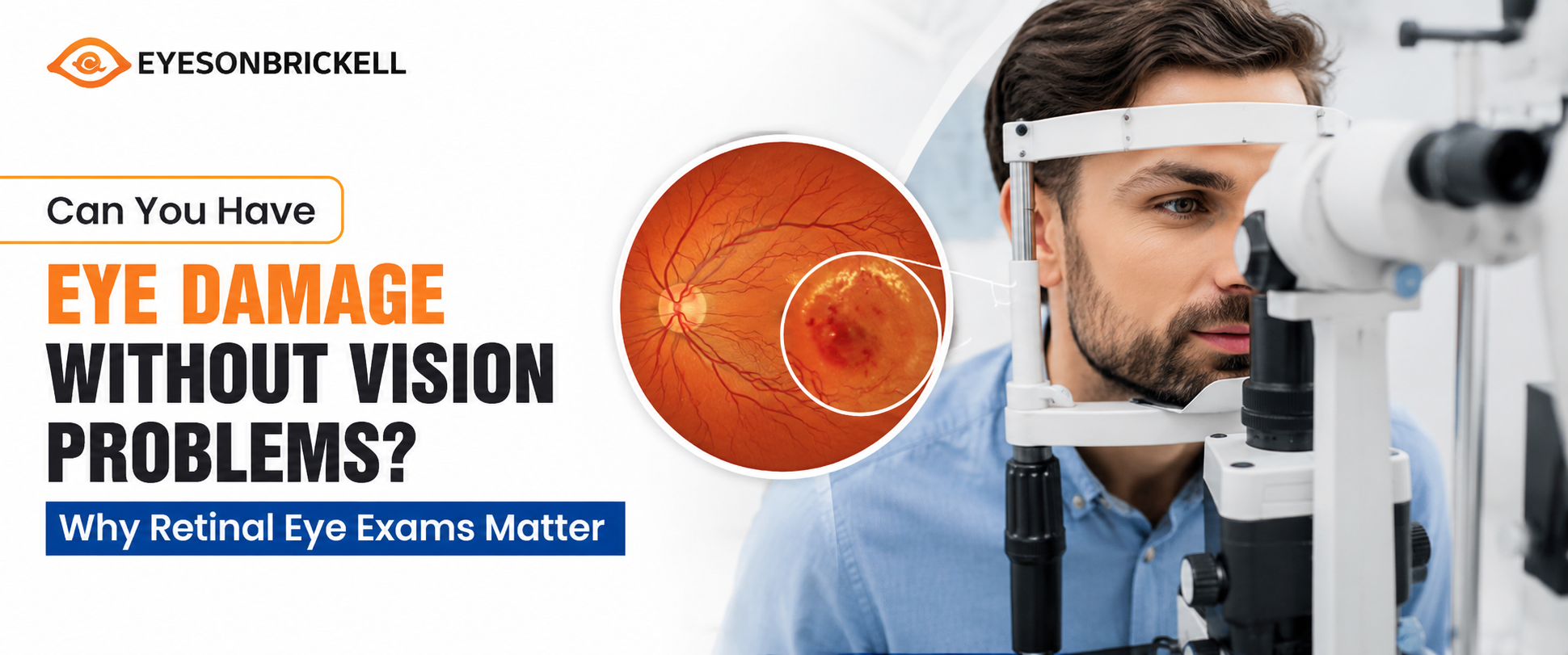
Can You Have Eye Damage Without Vision Problems? Why Retinal Eye Exams Matter
You can have clear vision and still have changes developing inside your eyes.
That may sound surprising, especially if you can read, drive, work on a computer, and go about your day without noticing anything unusual. But your ability to see clearly does not always tell the full story of your eye health. Some retinal conditions can develop gradually and cause few noticeable symptoms in their early stages.
That is one reason retinal eye exams are an important part of comprehensive eye care. By examining the retina, the light-sensitive tissue at the back of your eye, your eye doctor can look for changes that may not yet be affecting your everyday vision.
This is particularly important for people with diabetes, as diabetic retinopathy may have few obvious symptoms in its earlier stages.
Can You Have Eye Damage Without Noticing It?
Yes.
Some eye conditions can develop before you experience blurred vision, pain, or other obvious warning signs. The retina can undergo changes while your central vision still seems perfectly normal.
For example, diabetic retinopathy can affect the small blood vessels supplying the retina. Early changes may not produce symptoms that you can easily recognize. By the time noticeable vision changes occur, the condition may already be more advanced.
This is why waiting until something feels wrong is not always the best approach to protecting your eyesight.
A routine eye examination gives your eye doctor an opportunity to look beyond how well you can read an eye chart and assess the health of the structures inside your eyes.
What Does a Retinal Eye Exam Check?
A retinal eye examination focuses on the back of the eye, including the retina, blood vessels, and other structures that play an important role in vision.
Depending on your individual needs, your eye doctor may use dilation and specialized examination techniques or retinal imaging to look for abnormalities.
A retinal examination may help identify changes associated with conditions such as:
- Diabetic retinopathy
- Retinal swelling
- Retinal tears or other abnormalities
- Macular changes
- Abnormal blood vessel changes
- Other retinal conditions that may affect vision
Additional imaging, such as optical coherence tomography (OCT), may also be appropriate in certain situations to provide a more detailed view of the retina.
Why Are Retinal Eye Exams Important for People With Diabetes?
If you have diabetes, regular retinal monitoring becomes especially important.
Over time, elevated blood sugar can damage the tiny blood vessels that supply the retina. This can lead to diabetic retinopathy and other diabetes-related changes in the eye.
The challenge is that diabetic retinopathy may develop without obvious symptoms in its early stages. That means you should not rely on blurred vision or other noticeable changes as your only reason to schedule an examination.
A diabetic retinal eye exam allows your eye doctor to look for early signs of retinal changes and determine whether you need monitoring, additional testing, or treatment.
If you have been searching for a retina test for diabetes, retina check up for diabetes, or a retinal eye exam for diabetes in Miami, the right type and frequency of examination should be determined based on your diabetes history and individual eye-health needs.
What Happens During a Retinal Screening Eye Exam?
Many patients feel nervous when they hear the term “retinal exam,” but the examination itself is generally straightforward.
Your eye doctor will first review your medical and eye-health history and ask about any symptoms or changes in your vision.
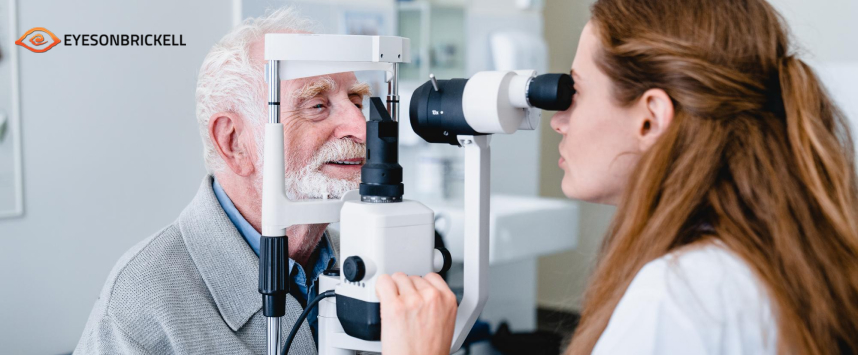
Depending on your examination, your pupils may be dilated so the doctor can get a better view of the retina. Specialized imaging may also be used when appropriate.
A Retinal Screening Eye Exam may help your eye doctor identify changes that would otherwise be difficult to detect during a basic vision check.
For people with diabetes, retinal photography can also be used as a screening method in some settings. However, retinal photography does not replace a comprehensive eye examination when an in-person evaluation or follow-up is needed.
Do You Need Retinal Exams for Diabetes Even If You See Clearly?
Yes, regular monitoring is important for people with diabetes because retinal disease can develop before noticeable vision problems.
This is one of the most common reasons patients search for retinal exams for diabetics or a diabetic eye exam in Miami after receiving a diabetes diagnosis.
Your recommended examination schedule can depend on factors such as:
- Whether you have type 1 or type 2 diabetes
- How long you have had diabetes
- Your blood sugar control
- Whether previous examinations showed retinal changes
- Your overall health and other risk factors
- Your eye doctor’s recommendations
There is no single schedule that is appropriate for everyone, so your eye-care professional can recommend the appropriate follow-up based on your individual situation.
What Can a Retinal Eye Exam Find Before You Notice Vision Changes?
One of the biggest advantages of retinal examinations is that they allow your eye doctor to look directly at structures involved in vision rather than relying only on how clearly you can see.
Depending on the examination and imaging performed, your doctor may identify signs of:
Diabetic Retinopathy
Diabetic retinopathy develops when diabetes affects the blood vessels in the retina. Early disease may produce few or no noticeable symptoms, making regular screening particularly important.
Retinal Swelling
Changes involving fluid or swelling in the retina can interfere with vision and may require monitoring or treatment depending on the cause.
Retinal Tears or Other Changes
Certain retinal abnormalities can require prompt attention, particularly when accompanied by sudden flashes, new floaters, or a shadow or curtain across part of your vision.
Macular Changes
The macula is responsible for detailed central vision. Changes affecting this area can have an impact on reading, recognizing faces, and other activities that require sharp central vision.
The earlier a potential problem is identified, the sooner your eye doctor can determine what should happen next.
When Should You Schedule a Retinal Eye Exam?
You do not necessarily need to wait until you notice a problem.
A retinal examination may be appropriate as part of routine comprehensive eye care, particularly if you have diabetes or other risk factors for retinal disease.
You should also seek prompt eye-care evaluation if you experience sudden changes such as:
- A sudden increase in floaters
- Flashes of light
- A dark spot or shadow in your vision
- A curtain-like effect across your field of vision
- Sudden or unexplained vision loss
- New distortion or significant changes in your vision
Sudden changes should not be ignored or treated as something that will necessarily go away on its own.
Looking for a Retinal Eye Exam in Miami?
If you are searching for retinal eye exams in Miami, a retinal screening near me, or an eye doctor in Miami who can evaluate the health of your retina, choosing an established eye-care practice can make routine monitoring easier.
At Eyes On Brickell, retinal examinations are part of comprehensive eye care designed to help identify potential problems early and give patients a clearer understanding of their eye health.
Whether you are due for routine screening, have diabetes and need ongoing retinal monitoring, or have noticed a recent change in your vision, an appropriate eye examination can help determine what is happening and what steps may be needed next.
Your Vision May Feel Fine. Your Retina Still Deserves Attention.
Clear vision is a good thing, but it does not always mean everything inside your eyes is healthy.
Regular retinal eye exams give your eye doctor an opportunity to examine the retina and look for changes that may not yet be noticeable to you. This is particularly important for people living with diabetes, where early retinal disease may develop without obvious symptoms.
If it has been a while since your last comprehensive eye examination, or you have been searching for a retinal eye examination in Miami, consider scheduling an evaluation with your eye-care professional.
Protecting your vision starts with knowing what is happening inside your eyes, even when everything looks clear.
Visit at: 2885 SW 3rd Ave Suite 100, Miami, FL 33129 Today!
FAQs
1. Can you have retinal damage even if your vision is normal?
Yes. Some retinal conditions, including early diabetic retinopathy, may develop without noticeable changes in vision. Regular retinal eye exams can help detect changes before they begin affecting how you see.
2. How often should you have a retinal eye exam if you have diabetes?
The recommended frequency depends on your type of diabetes, how long you have had it, your blood sugar control, previous eye-exam results, and other risk factors. Your eye-care professional can recommend the appropriate schedule for you.
3. What does a retinal eye exam detect?
A retinal examination can help identify changes associated with diabetic retinopathy, retinal swelling, retinal tears, macular conditions, and other abnormalities affecting the back of the eye.
4. What happens during a retinal eye exam? Does it hurt?
A retinal eye examination is generally straightforward and does not usually cause pain. Your pupils may be dilated, and your eye doctor may use specialized equipment or retinal imaging to examine the retina more closely.
5. Where can I get a retinal eye exam in Miami?
If you’re looking for a retinal eye exam in Miami, choose an established eye-care practice that can assess your individual needs and provide appropriate retinal screening and follow-up. Eyes On Brickell offers retinal eye examinations as part of comprehensive eye care.