What’s the Difference Between a Routine Eye Exam and Diabetic Retinal Screening?
Imagine walking through your day with perfect 20/20 vision, completely unaware that the tiny blood vessels in the back of your eyes are leaking fluid. It sounds frightening, but it happens every single day.
Many people living with diabetes assume that because they can read street signs or phone screens clearly, their eyes are perfectly healthy. This is a common and dangerous misunderstanding.
When you live with high blood sugar, a standard vision checkup is simply not enough to protect your sight. Understanding the exact difference between a routine vision test and specialized diabetic retinal eye exams is the first step toward saving your vision.
The Routine Eye Exam: Testing Your Focus
A routine eye checkup is what most people think of when they visit an optometrist. The primary goal of this visit is to check how clearly you can see and determine if you need corrective lenses.
During a standard exam, your doctor will have you read letters off a wall chart to measure your visual sharpness. They will use different lenses to find your exact prescription for glasses or contacts.
They also perform a quick check on the fluid pressure inside your eyes to screen for general conditions like glaucoma.
While these steps are incredibly important for your daily comfort, a routine test stays focused on the front parts of your eye, like the lens and cornea.
It does not go deep enough to spot the microscopic changes caused by blood sugar. For that deeper look, you need specialized diabetic retinal eye exams.
The Diabetic Retinal Screening: Checking Your Blood Vessels
A retinal eye exam for diabetes is a specialized medical evaluation. Instead of checking how well you see, this exam looks closely at the very back of your eye. This area contains the retina, which is the light-sensitive tissue that sends visual signals to your brain.
High blood sugar does not change your glasses prescription first. Instead, it quietly damages the microscopic, fragile blood vessels that supply oxygen to your retina.
Over time, sugar weakens these tiny vessel walls. This causes them to bulge, leak clear fluids, or bleed directly into the eye. This silent condition is called diabetic retinopathy.
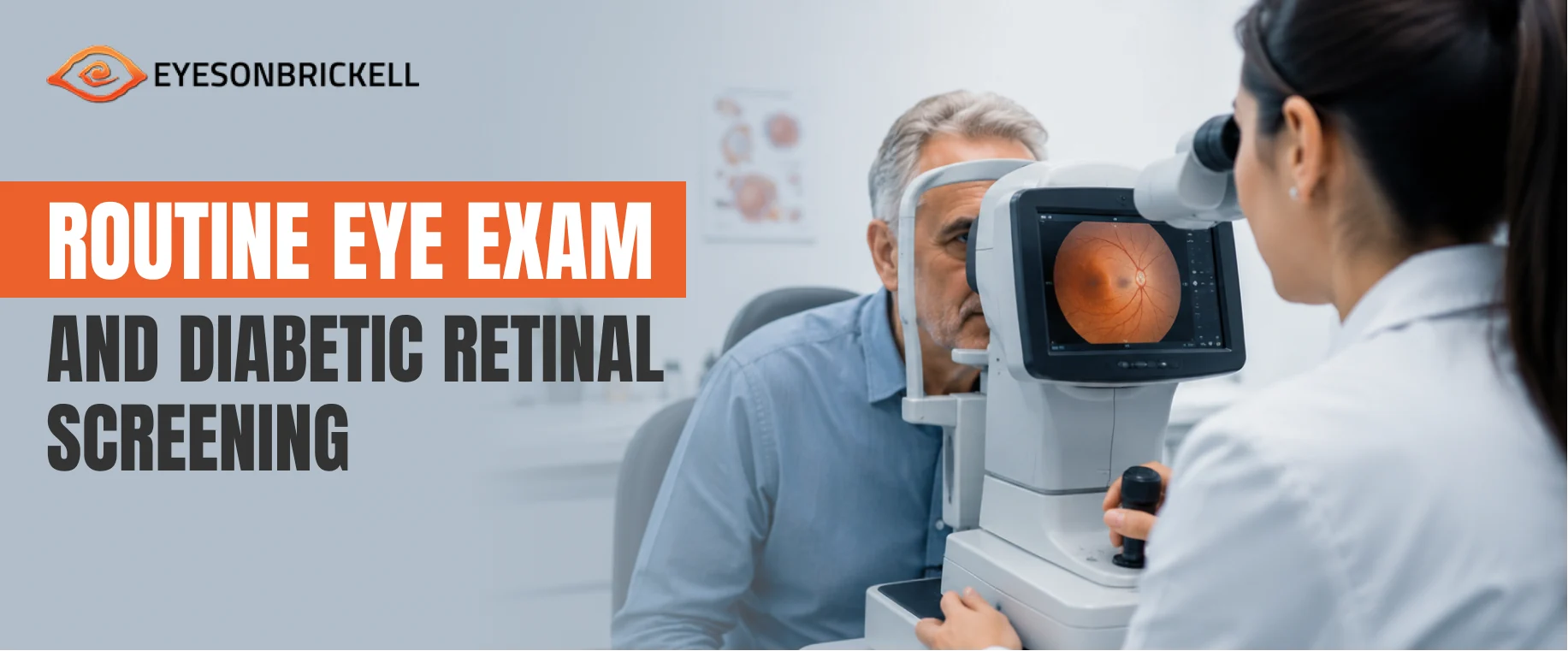
To catch this early, your doctor uses advanced imaging technology. A specialized retinal eye examination maps the deep structures of your eye. Doctors take high-resolution digital photographs to scan the health of your blood vessels in real-time. This allows them to see hidden structural changes long before you ever notice a single symptom.
Head-to-Head Comparison: The Key Differences
To help you see how these two sessions differ, here is a simple breakdown of what each exam targets:
| Feature | Routine Eye Exam | Diabetic Retinal Screening |
|---|---|---|
| Primary Goal | Find your glasses prescription and check general eye comfort. | Scans for bleeding, leaking fluids, and tissue swelling. |
| Area of Focus | The front of the eye (lens, cornea, and general clarity). | The deep back of the eye (retina, macula, and blood vessels). |
| Warning Signs | You experience squinting, headaches, or blurred vision. | None. The dangerous early stages are completely silent. |
| How Often? | Every 1 to 2 years for general vision updates. | Strictly every single year without exception. |
Why “Good Blood Sugar” Is Not a Reason to Skip
A major reason people skip scheduling their diabetic retinal eye exams is that their daily health numbers look excellent. They check their blood sugar daily, keep their A1C stable, and feel completely fine.
However, medical tracking shows that retinal damage is cumulative. Short spikes in blood sugar from months or even years ago can leave behind permanent weaknesses in your capillary walls.
These weakened areas can slowly begin to leak fluid later on, even if your current blood sugar is perfectly controlled today.
Because early damage happens on a microscopic level, you cannot feel it happening. There is no pain, no pressure, and no immediate blurriness. Waiting until you notice changes in your sight means waiting until permanent structural damage has already occurred.
This is why a consistent Retinal screening eye exam is non-negotiable for long-term health management.
Take Control of Your Eye-Sight
Your vision is irreplaceable. Managing diabetes requires tracking more than just your diet and daily finger-pricks; it requires looking at the blood vessels that keep you seeing clearly. Do not wait for warning signs like floating dark spots or sudden blurriness to alter your day.
Scheduling your annual diabetic retinal eye exams ensures that hidden complications are caught and stopped before they can disrupt your life. Protect your vision by making a professional retina check up for diabetes a permanent part of your yearly health circle.
If you are ready to secure your eye health with advanced diagnostic care, visit Eyes on Brickell at 2885 SW 3rd Ave, Suite 100, Miami, FL 33129.
Schedule an Appointment Today!
FAQs
1. Do diabetic retinal eye exams hurt?
No, the screening is completely painless and non-invasive. The diagnostic machines use gentle light waves and digital photography to scan the back of your eye without ever touching it.
2. Can I drive myself home after diabetic retinal eye exams?
If your doctor uses advanced wide-field cameras, dilation isn’t needed and you can drive immediately. If dilating drops are used, bring a driver since your eyes will be light-sensitive.
3. How long do diabetic retinal eye exams take?
The specialized imaging and retinal scan are highly efficient. The entire process typically takes just 15 to 30 minutes, and your eye doctor reviews the digital results immediately.
4. Will a regular eye exam satisfy my doctor’s medical requirement for diabetes tracking?
No. A routine exam only measures vision clarity and prescription needs. Physicians and insurance providers require specialized diabetic retinal eye exams because they evaluate internal blood vessel health.
5. What are the early symptoms of diabetic eye damage?
Early diabetic retinopathy has zero warning signs. Waiting for symptoms like blurry vision or floating dark spots to appear means waiting until permanent, structural blood vessel damage has already occurred.