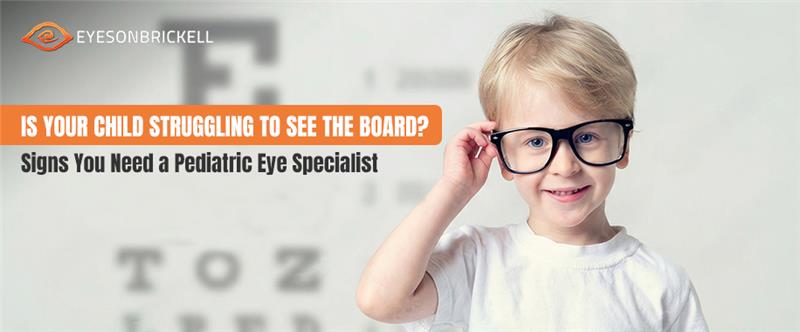
Is Your Child Struggling to See the Board? Signs You Need a Pediatric Eye Specialist
Did you know that 1 in 4 children have an undiagnosed vision problem? With kids now averaging 6 to 7 hours of screen time daily, digital eye strain and blurred vision are more common than ever!
Children rarely complain because they assume everyone sees the world exactly as they do. Consequently, these hidden issues quietly disrupt reading, writing, and distance recognition.
If your child is losing focus or falling behind, it may not be a learning struggle but rather a problem with their sight. Consulting a pediatric eye care center for a check-up with a qualified pediatric eye specialist ensures early detection, giving your child the clarity they need to thrive.
Common Signs Your Child Needs an Eye Specialist
Since children often lack the vocabulary to explain that “the words are dancing on the page,” parents and teachers must act as visual detectives. If you notice any of the following behavioral cues, it is time to schedule a comprehensive eye exam with pediatric eye care specialists.
1. Squinting or Tilting the Head
This is one of the most common physical compensations for poor vision. By squinting, a child reduces the amount of light entering the eye to temporarily improve clarity.
- The “Tilt” Factor:
A child might tilt their head to align their eyes due to an imbalance like Strabismus (crossed eyes) or to see “around” a refractive error.
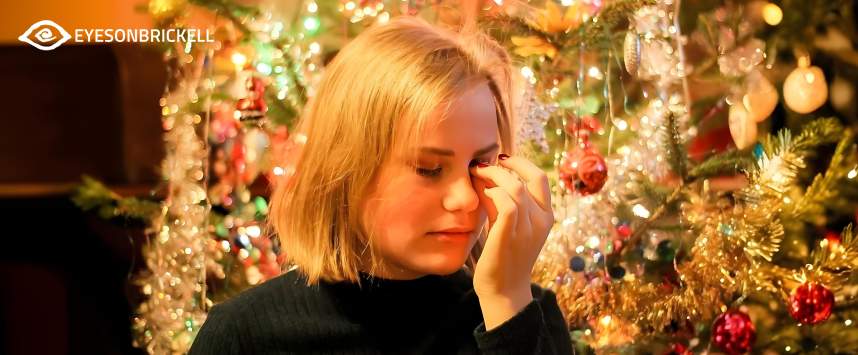
2. Frequent Eye Rubbing
Persistent rubbing during visual tasks is a major red flag for eye fatigue. When the eye muscles overwork to focus on a screen or book, they become tired and irritated. This can also indicate allergic conjunctivitis, which requires a professional diagnosis from a pediatric eye clinic.
- Eye Strain:
When the eye muscles overwork to focus on a screen or book, they become tired and irritated.
- Medical Indicators:
Chronic rubbing can also indicate allergic conjunctivitis or dry eye syndrome, both of which require a professional diagnosis from a pediatric eye clinic.
3. Sitting Too Close to the TV
If your child sits inches from the television or holds a tablet against their nose, they are likely struggling with Myopia (nearsightedness). Sitting close is their way of bringing a “blurry” world into their functional range.
- Distance Vision:
For a nearsighted child, distant objects appear blurry, while near objects are clear. Sitting close is their way of bringing the “blurry” world into their functional range.
4. Closing or Covering One Eye to Read
When a child closes one eye, they are effectively “shutting off” the data from that eye to avoid double vision or confusion. If left untreated, the brain may begin to permanently ignore the weaker eye, leading to Amblyopia (lazy eye).
- Muscle Imbalance:
This is a classic sign of an eye muscle imbalance or a significant difference in prescription between the two eyes.
- Amblyopia Risk:
If left untreated, the brain may begin to permanently ignore the weaker eye, leading to Amblyopia (lazy eye).
5. Sensitivity to Light and Frequent Headaches
Does your child complain about the “bright sun” or experience headaches after a day at school? Increased screen time can lead to light sensitivity and “brow ache,” where the muscles around the eyes remain tensed for hours.
- Digital Eye Strain:
Increased screen time can lead to light sensitivity and “brow ache,” where the muscles around the eyes remain tensed for hours.
- Binocular Vision Dysfunction:
Headaches at the end of a school day are often caused by the intense effort required to keep both eyes focused on the board.
What Can a Pediatric Eye Specialist Do for Your Child?
A pediatric eye specialist offers much more than a standard vision screening. Whether you visit a specialized pediatric eye hospital or a private boutique clinic, the care is designed for the unique developmental needs of growing eyes.
An eye specialist pediatric professional can provide:
- Comprehensive Developmental Exams:
Deep-dive evaluations of coordination and visual tracking that an eye doctor for pediatrics uses to identify issues school screenings miss.
- Advanced Myopia Management:
One of the most effective modern solutions is Myopia Control Treatment using (Orthokeratology) Ortho-K lenses. These specially designed overnight contact lenses gently reshape the cornea while your child sleeps, allowing them to see clearly during the day without glasses or contacts. Ortho-K not only corrects vision temporarily but also helps slow the progression of myopia, which is especially important during childhood when eyesight can worsen quickly. This proactive approach reduces the long-term risk of serious eye conditions associated with high myopia later in life.
- Detection of “Silent” Conditions:
Identifying Amblyopia and Strabismus while the brain is still “plastic” enough to be retrained.
- Kid-First Technology:
Utilizing stress-free digital instrumentation and dilated fundus exams.
- Personalized Treatment:
Creating custom plans that include precision prescriptions, vision therapy, and long-term myopia control strategies.
A pediatric eye specialist understands that a child’s vision is constantly evolving, requiring a more nuanced approach than adult eye care.
Prioritizing Your Child’s Vision for a Lifetime
Clear vision is the cornerstone of a child’s education, confidence, and safety. When a child sees the board without straining, they are more engaged and better equipped to thrive.
Don’t wait for a struggle to become a setback. Choosing a pediatric eye specialist can be the turning point in your child’s development. For expert care in a welcoming environment, contact Eyes on Brickell today.
Don’t let vision problems hold your child back, Visit 2885 SW 3rd Ave, Suite 100, Miami, FL 33129 to schedule your appointment.
FAQs
1. At what age should my child have their first eye exam?
Follow-up exams should occur at age 3 and again before they begin kindergarten to ensure their vision is developing correctly for school.
2. My child passed the school vision screening; do they still need to see a specialist?
Yes! School screenings are great for catching major sight issues, but they often miss functional problems like eye tracking, binocular vision, and mild astigmatism. A pediatric eye doctor specialist performs a much deeper evaluation of eye health and coordination.
3. What are the signs of digital eye strain in children?
Common signs include:
- frequent headaches,
- eye rubbing,
- blurred vision,
- and a loss of focus after screen use.
4. Will my child’s eyes be dilated during the exam?
Yes! These gentle drops relax the eye’s focusing muscles and widen the pupil, allowing the specialist to get the most accurate prescription and a clear view of your child’s overall eye health.
5. Can vision problems be mistaken for learning disabilities?
Yes! Vision issues like poor eye tracking can cause words to “jump” on the page, mimicking the symptoms of ADHD or dyslexia. A comprehensive exam ensures a child’s academic struggle isn’t actually a treatable sight problem.