myopia contact lenses

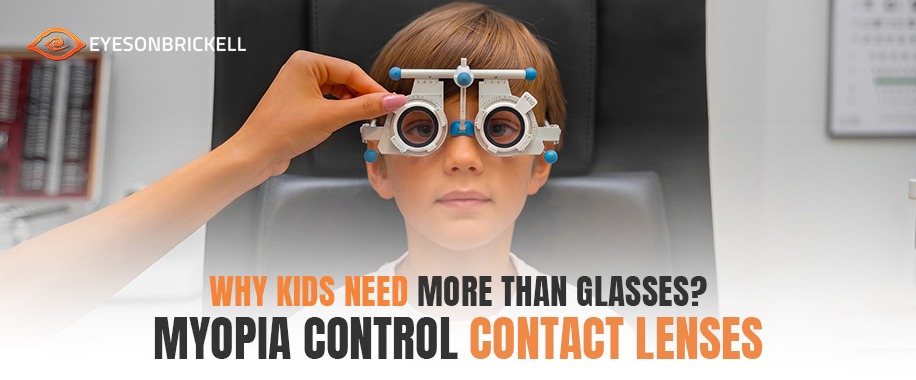
Myopia Control Contact Lenses

Most Parents Think Myopia Is Just About Updating Glasses Every Year – But It’s Not

When a child starts struggling to see the board at school, many parents assume the solution is simple: schedule an eye exam, get a stronger pair of glasses, and move on. But what if your child needs a stronger prescription again the following year? And then again the year after that? This pattern can be more than a routine need for updated eyewear. It may be a sign that your child’s myopia (nearsightedness) is progressing. Myopia is becoming increasingly common worldwide. A recent National Academies report notes that, if current trends continue, approximately 5...

Read more...
Child inserting a myopia control contact lens at Eyes On Brickell in Miami

Could Contact Lenses Slow Your Child’s Nearsightedness? A Miami Parent’s Guide

Medically reviewed by Dr. Antoine Copty, OD — Eyes On Brickell, Brickell, Miami, FL. Last updated: July 2026. If your child's glasses prescription keeps getting stronger every year, you're not imagining it, and you're not alone. Childhood myopia (nearsightedness) is rising fast, and once it starts, it usually keeps progressing through the school years. The encouraging news for parents in Brickell and across Miami is that we can now do far more than simply hand out a stronger pair of glasses each visit. Myopia control contact lenses and related treatments are clinically proven to slow how quickly a child's...

Read more...
Myopia Management Solutions

A Guide to Myopia Management in Kids: Signs, Causes, and Potential Solutions

Is your child complaining about blurry vision when looking at objects far away? If so, this could be the sign of myopia, which is also known as nearsightedness. It occurs when the eye is unable to focus light properly, resulting in blurred distance vision. It often starts during childhood and tends to progress as the child grows, making it important for parents to understand what myopia is and how to manage it. Research from the American Academy of Ophthalmology indicates that children who spend more time indoors on near-focused activities—such as using computers, playing video games, or reading—tend to have higher rates of myopia compared to those who spend more time...

Read more...
You've just added this product to the cart: